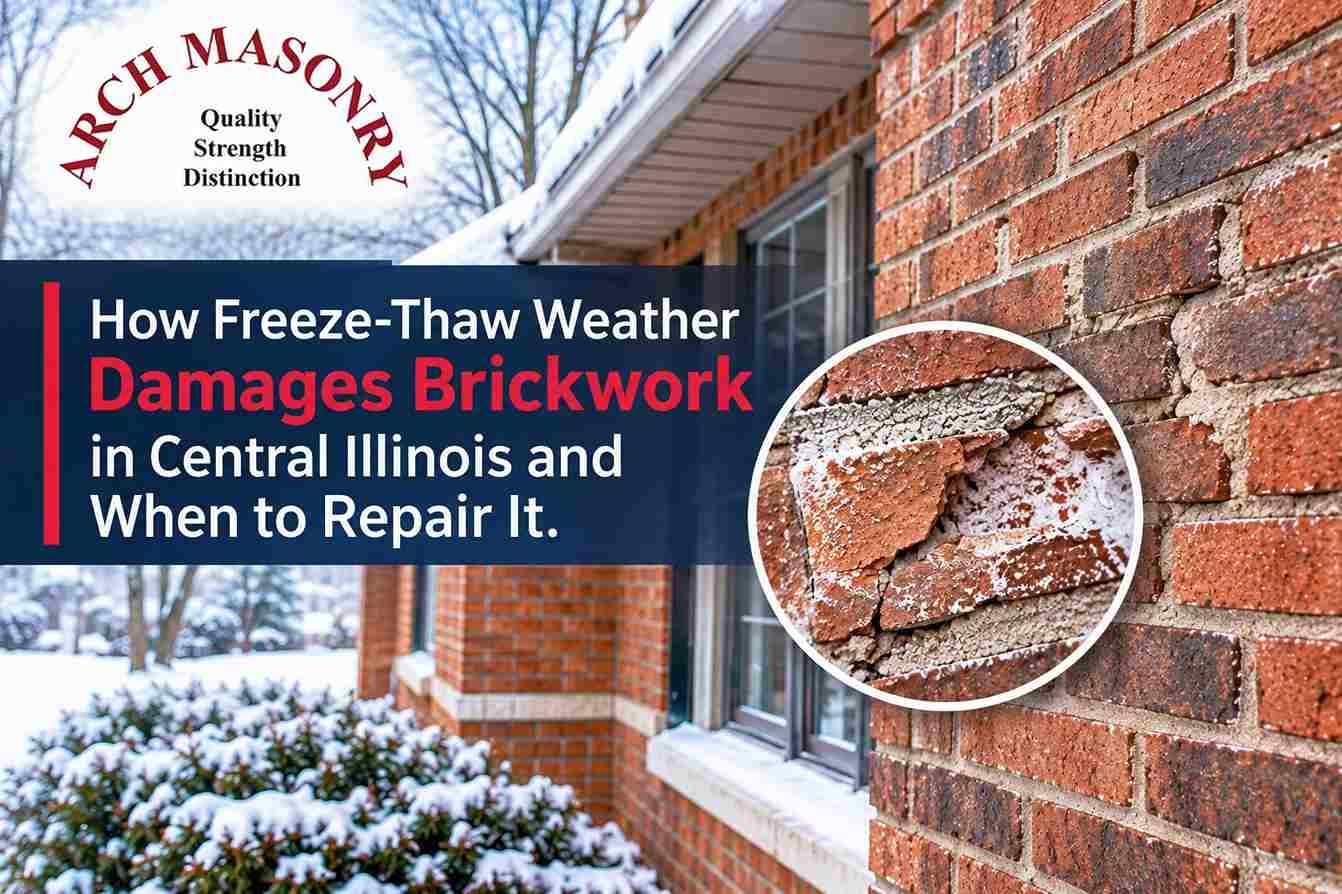
Central Illinois winters can be tough on brick homes and masonry. When temperatures rise and then drop below freezing, moisture trapped inside bricks and mortar can freeze, expand, and then thaw. This repeated cycle can gradually weaken masonry and lead to freeze-thaw brick damage. For homeowners, recognizing the early signs of brick damage can help prevent a small issue from becoming a much larger repair. Knowing when to schedule brickwork repair can also help protect the rest of your home’s exterior. Follow this guide by Arch Masonry to better understand how freeze-thaw weather affects brickwork and when repairs may be necessary.
How Freeze-Thaw Brick Damage Works
Brick is naturally porous, which means it can absorb moisture from rain, snow, and melting ice. When temperatures drop below freezing, that moisture can freeze and expand inside the brick. Repeated freezing and thawing creates pressure within the masonry, which can eventually lead to brick cracking, surface flaking, and other forms of freeze-thaw masonry damage. Mortar joints can also be affected, as Brick mortar deterioration may cause joints to become cracked, soft, or crumbly. Once mortar begins to deteriorate, water can find an easier path into the masonry, increasing the risk of moisture damage to brick and surrounding materials.
Signs Your Brickwork Needs Repair
Some masonry problems may be minor, while others can indicate more serious structural brick damage. Recognizing these warning signs early can help prevent deterioration from spreading.
Common signs of brick damage include:
- Bricks that are flaking, chipping, or breaking apart
- Mortar that crumbles easily when touched
- White staining or mineral deposits caused by moisture
- Cracks around windows, doors, or building corners
- Loose or displaced bricks
- Water stains or signs of moisture near interior walls
When Should You Repair Brick Damage?
The sooner damaged masonry is addressed, the easier it may be to limit further deterioration. Minor mortar problems may only require localized exterior masonry repair, while heavily damaged areas may need brick wall repair or more extensive masonry restoration. Also, Chimneys should not be overlooked. Because they remain exposed to rain, snow, ice, and temperature changes throughout the year, chimney brick damage can develop gradually. Cracked bricks and deteriorating mortar can allow moisture deeper into the structure and make winter masonry damage worse. If you notice significant cracking, loose bricks, deteriorating mortar, or recurring moisture problems, having the masonry evaluated can help determine whether repairs are needed.
Protecting Your Brickwork Through Winter
Good brick maintenance can help you identify problems before another winter makes them worse. Keep these tips in mind:
- Inspect brickwork before winter: Check for cracked bricks, deteriorating mortar, loose masonry, and other visible damage.
- Check masonry after winter: Look for new cracks, flaking, spalling, or crumbling mortar caused by repeated freezing and thawing.
- Maintain gutters and downspouts: Make sure water is directed away from brick walls and does not collect around the foundation.
- Address drainage problems: Standing water and constant moisture exposure can increase the risk of moisture damage to brick.
- Repair damaged mortar: Repoint deteriorating mortar joints before winter to help limit water penetration.
- Replace severely damaged bricks: Cracked or heavily deteriorated bricks may need professional brick damage repair or replacement.
- Inspect chimneys: Check for cracked bricks, loose mortar, and other signs of chimney brick damage.
- Hire an experienced contractor: For Illinois brick repair, choose a masonry professional familiar with Central Illinois weather and older masonry construction.
Choosing a Central Illinois Masonry Contractor
Whether you need Washington IL masonry repair or Peoria IL brick repair, having the damage properly evaluated is important. A qualified Central Illinois masonry contractor can determine whether the problem is limited to deteriorating mortar, involves individual bricks, or requires more extensive masonry repair. A professional is recommended for proper evaluation and repair. Arch Masonry provides reliable brickwork repair and masonry construction, restoration, and repair services.
Conclusion
Freeze-thaw weather is part of living in Central Illinois, but homeowners do not have to ignore the damage it can cause. Regular inspections, proper brick maintenance, and timely repairs can help protect your home’s masonry through changing seasons. If you notice winter masonry damage, brick cracking, deteriorating mortar, or other signs of structural brick damage, addressing the problem early may help prevent more extensive deterioration later. Whether you need minor brickwork repair or more involved masonry restoration, taking care of damaged masonry before another freeze-thaw season can help keep your home protected, and with Arch Masonry, everything is possible.
FAQ’S
What are the signs of frost damage to brickwork?
The common signs of frost damage to brickwork include Bricks that are flaking, chipping, or breaking apart; mortar that crumbles easily when touched, White staining or mineral deposits caused by moisture; cracks around windows, doors, or building corners; loose or displaced bricks; and Water stains or signs of moisture near interior walls
What causes bricks to disintegrate?
Bricks are porous, so when water gets into them, they expand due to freezing temperatures, which causes bricks to disintegrate.
How to repair frost-damaged bricks?
Repairing frost-damaged bricks is done by professionals and includes patching the surface or removing the brick entirely.
How to protect your brickwork through winter?
To protect your brickwork through winter, you should stop the water from getting into the brickwork and masonry, resulting in freezing.
Can brickwork be done in cold weather?
Yes, brickwork can be done in cold weather, but precautionary measures should be taken to protect it.